
I’m not a relationship expert. I’m not a private investigator. I’m just a guy who got burned once and learned a few things the hard way. So if you’re here because something about that person you’re talking to feels off, I get it. I’ve been there.
Let me tell you what happened to me. Then I’ll give you the stuff I wish I’d known before I wired a thousand bucks to a woman who didn’t exist.
My Story: The One That Cost Me $1,000
This was about three years ago. I was single, working a lot, and figured I’d give Tinder a shot. Nothing serious. Just see what’s out there.
Matched with this woman named Sara. Graphic designer from Chicago. Her photos looked real enough — travel shots, art shows, a warm smile. We started talking, and honestly, the conversation flowed. She was funny. Asked good questions. Remembered little details I mentioned. After a few weeks, I actually thought, “Okay, this one might be different.”
Then her mom got sick. Needed surgery. Bank issues. Could I help with $1,000? She’d pay me back right away.
I sent it. You already know what happened next. Profile gone. Number disconnected. Money gone.
I felt stupid. Not because I lost the money — that sucked, sure — but because I’d let myself believe something that was never real. The signs were there. I just didn’t want to see them.
The Signs I Missed (So You Don’t Have To)
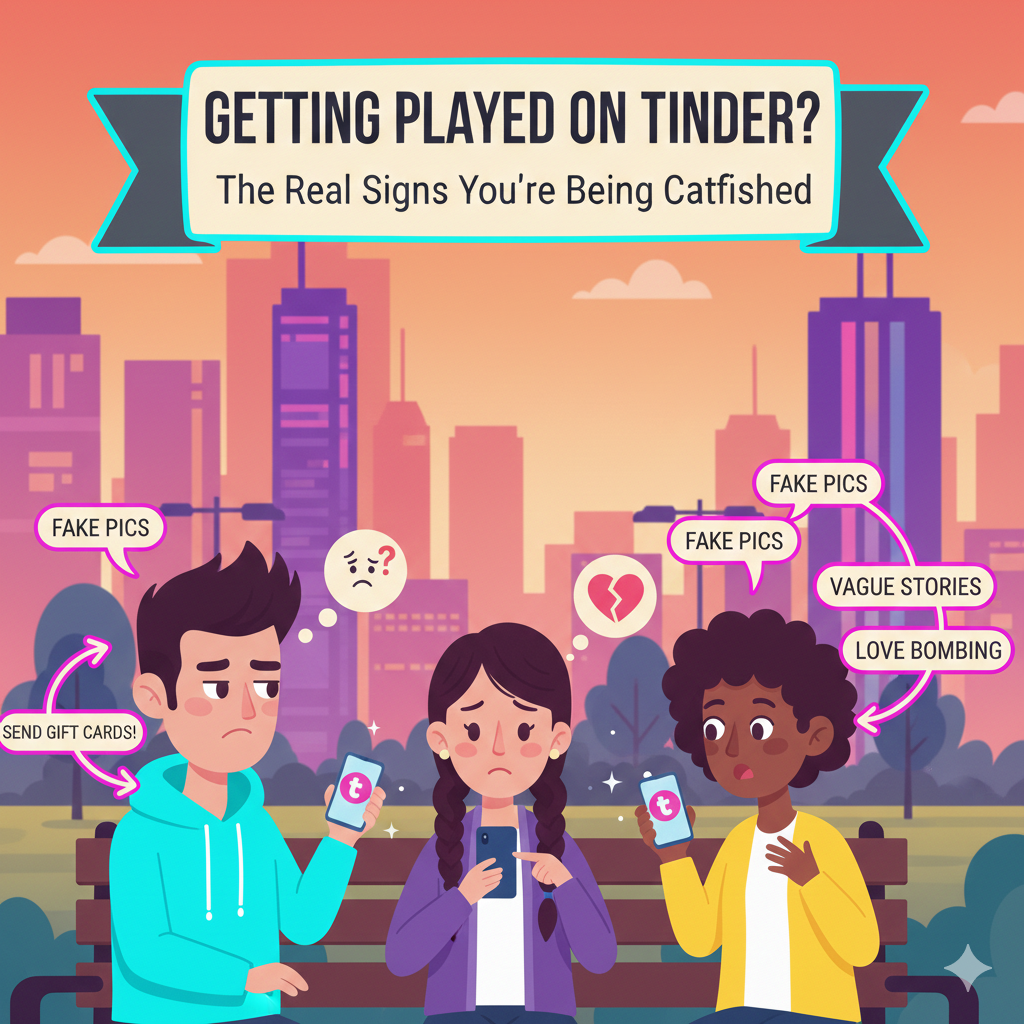
Looking back, there were red flags everywhere. I just ignored them because I wanted the connection to be real. Here’s what I should’ve caught:
The photos were too perfect. Not a single awkward angle. Not one blurry selfie. Every shot looked like it came from a professional portfolio. That’s because it did. Scammers pull photos from real people’s Instagram accounts and use them as their own.
She never wanted to video chat. Always some excuse — bad lighting, bad connection, hated how she looked on camera. I told myself it was nerves. It wasn’t. It was because “Sara” didn’t exist.
The emergency came out of nowhere. We’d been talking for weeks, and suddenly her mom needed surgery and her bank was down and could I just help out? That’s how they hook you. They build trust for weeks, then hit you with a crisis when your guard is down.
The details didn’t always line up. Her job description changed a little. Her location was vague. Small things, but they add up.

How I Found Out the Truth
After Sara disappeared, I started digging. I uploaded one of her photos to a reverse image search tool. Within minutes, I found the real woman in the photos — a model in Texas. The pictures were stolen straight from her public Instagram.
I reached out to her. She wasn’t surprised. Said it happens all the time.
That was the moment I realized how easy this is for scammers. They don’t need to be clever. They just need photos, a story, and someone willing to believe.
How to Check If Someone’s Real (Before It’s Too Late)
Here’s the stuff I wish I’d done from day one. None of this is complicated. You just have to actually do it.
Reverse image search their photos. This is the big one. Upload their profile pic to Google Images, TinEye, or Yandex. If the same face shows up under a different name, you’ve got your answer. It takes two minutes.
Ask for a live photo. Not a saved one. Something specific — “Send me a pic with a spoon on your head” or “Hold up three fingers.” Scammers can’t do that. They don’t have the person.
Video chat early. Not weeks in. Early. If they keep dodging, that’s your sign. Someone who’s real will find a way to make it happen.
Search their phone number. Drop it into a people search site. See if the name matches. See if anything comes up at all. Sometimes you’ll find scam reports. Sometimes you’ll just find nothing, which is also a sign.
Watch for money requests. This is the ultimate red flag. It doesn’t matter how convincing the story is. Real people you’ve never met don’t ask you for money. Ever.
Trust your gut. If something feels off, it probably is. I knew something was weird about Sara’s story. I just didn’t want it to be true.
Tools That Actually Help
You don’t need to spend a fortune on this stuff. Most of what you need is free.
Google Images — Free. Just click the camera icon and upload a photo. Good for spotting stolen stock images.
TinEye — Free. Tells you when an image first appeared online. If their photo shows up from 2019, that’s a problem.
Yandex — Free. Surprisingly good at matching faces. Better than Google for this, honestly.
Bing Visual Search — Free. Run it alongside the others. Sometimes it catches stuff they miss.
If you want to go deeper and you’ve got a phone number or email, you can try a people search site. I’ve used Spokeo before. It’s 95 cents for the trial and gives you basic info. Just cancel within the week or they’ll charge you monthly.
I’m not saying any of these are perfect. They’re not. But they’re better than doing nothing.
What to Do If You’ve Already Been Scammed
First, don’t beat yourself up. These people are good at what they do. They know how to make you feel seen, then they use that against you. It’s not your fault.
Report the profile to Tinder. Report it to the FTC at reportfraud.ftc.gov. If you sent money, contact your bank or the payment app immediately. Sometimes you can get it back. Sometimes you can’t. But you have to try fast.
And then take a break. Talking to someone new right away is how you get burned again. Give yourself time to reset.
The Bottom Line
Catfishing isn’t going away. If anything, it’s getting worse. But you don’t have to be a victim. A few minutes of checking can save you a lot of money and heartache.
Ask for a live photo. Video chat early. Reverse search their pictures. Watch for money requests. And trust your gut.
Real people don’t disappear when you ask for proof. Real people don’t need your money. Real people don’t make you feel crazy for asking basic questions.
If something feels wrong, it probably is. Listen to that feeling. It’s the best tool you’ve got.
Have you been catfished? What signs did you miss? Drop it in the comments — sharing your story might help someone else avoid the same trap.
I hope this article may help you. For more articles on dating, cheating, and catfishing, check out the home page at CatchingCheating.com.