
Disclaimer: This article is for educational purposes only. I may earn a commission from links used, at no extra cost to you.
Hey everyone, Sam here—a digital marketing expert based in New York City. I’ve spent years helping brands build trust online, crafting campaigns that connect people authentically in a digital world full of noise. But even experts like me can get tripped up when it comes to personal stuff, especially on dating apps like Tinder. Catfishing—where someone pretends to be someone else, often for money or emotional manipulation—is rampant. According to recent stats from the FTC, romance scams cost Americans over $1 billion in 2025 alone, and Tinder is a hotbed for these cons. Every day, thousands fall victim, losing not just cash but their sense of security too. If you’re swiping right and wondering if that perfect match is too good to be true, this article is for you. I’ll share my own embarrassing (and expensive) story of getting catfished, how I uncovered the truth, and practical steps to protect yourself. Let’s dive in—because knowledge is your best defense in the wild world of online dating.
My Personal Nightmare: The “Sara” Scam That Cost Me $1000
It all started about three years ago, in 2023. I was single, busy with client pitches and SEO strategies, and thought Tinder would be a fun way to meet someone without much effort. I created a profile—nothing fancy, just a few pics from hikes and work events, bio saying I’m a marketing guy who loves coffee and good conversations. Swipes started rolling in, and one profile caught my eye: Sara, 28, a graphic designer from Chicago. Her photos showed a pretty woman with a warm smile, traveling, at art shows, looking like she had her life together. We matched, and the chat flowed effortlessly.
For the first week, it was light—sharing memes, talking about favorite movies (she loved indie films, I pretended to know more than I did). By week two, it got deeper: She opened up about her dreams of starting her own design studio, I shared my stresses from running campaigns. We texted daily, sometimes late into the night. She seemed genuine—sent voice notes with a soft Midwestern accent, even shared “real-time” pics from her day. I felt a connection; it had been a while since someone made me laugh like that.
After a month, I suggested meeting. I was planning a trip to Chicago for a conference—perfect timing. But Sara hesitated: “I’d love to, but things are crazy with work.” Okay, fair. A few days later, she dropped the bomb: “Sam, I’m so sorry to ask, but my mom’s really ill. She needs surgery, and my bank’s server is down—I can’t access my funds until tomorrow. Can you help with $1000? I’ll pay you back right away.” Red flags? Sure, but after 30 days of building “trust,” I wired the money via Zelle. She thanked me profusely, promised a date soon.
You guessed it—radio silence. Her profile vanished the next day. I felt like an idiot. The money was gone, but worse was the betrayal. How did I fall for it? Looking back, the signs were there: No video calls (she “hated her camera”), vague job details, and that sudden emergency. It was classic catfishing—using stolen photos and scripted charm to extract cash. I reported it to Tinder and the FTC, but recovery was slim. That’s when I dove into research, desperate to understand how it happened and prevent it for others.
The Turning Point: How Social Catfish Exposed the Lie
In my quest for answers, I stumbled on Social Catfish—a tool designed to verify online identities. I uploaded one of Sara’s photos (saved from our chats) for a reverse image search. Within minutes, it traced the image to an Instagram account of a real woman in Texas—a model named Lisa. The pics were lifted straight from her public feed, cropped and filtered to fit the scam.
I reached out to Lisa via DM: “Hey, this might sound weird, but someone used your photos to scam me on Tinder.” She was horrified—said it wasn’t the first time. We chatted; she even shared tips on watermarking images. Social Catfish didn’t just confirm the catfish; it gave me peace, knowing “Sara” was fake. Their report linked the phone number she gave (briefly) to scam complaints elsewhere. For $23.66/month (with a trial), it’s a bargain for the accuracy—pulling from public records, social media, and dating sites. Their YouTube channel is packed with user videos: People sharing how they caught cheaters or avoided fraud, with before-and-after screenshots. It’s empowering.

This experience changed me. As a digital marketer, I know how easy it is to craft online personas—scammers do the same. Now, I advocate for vigilance. Below, I’ll outline steps to spot and avoid catfishing on Tinder.
Step 1: Spot the Early Warning Signs in Profiles and Chats
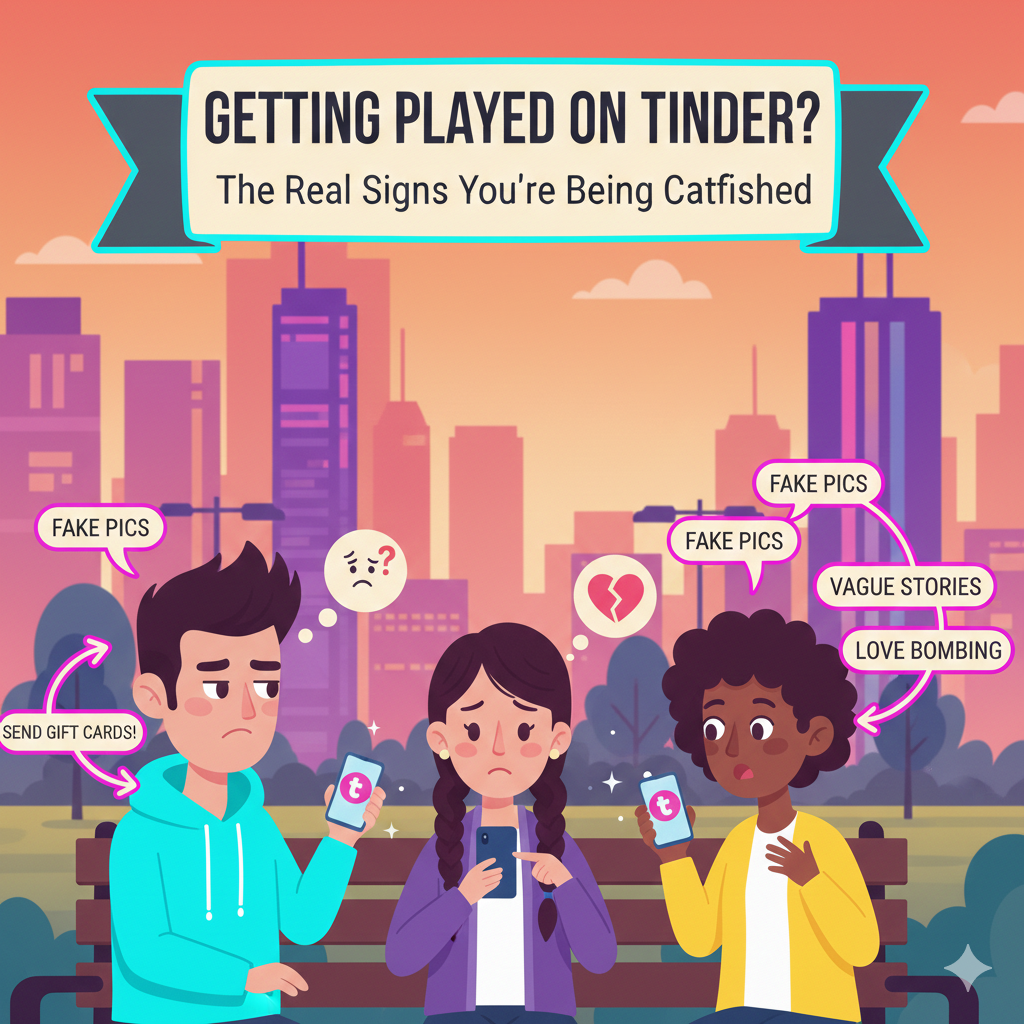
Catfishers often use polished but inconsistent profiles. Look for:
- Stock photos or overly professional shots—reverse search them on Google Images or TinEye.
- Bios that are generic: “Love traveling, food, and good vibes.” Real people add quirks.
- Quick escalation: They declare love or deep feelings too soon to build emotional hooks.
- Avoidance of calls: Always “busy” or “bad connection”? Red flag.
- Inconsistent stories: Details about job, family, or location change over time.
In my case, Sara’s travel pics were flawless but never included her face fully in recent ones—classic stolen content.
Step 2: Verify Identity with Free Tools Before Getting Too Involved
Don’t wait a month like I did. Early on:
- Ask for a live photo: “Send a pic with today’s date or a specific pose.”
- Video chat: Tinder has built-in video, or switch to FaceTime/Zoom.
- Social media cross-check: If they share Instagram, verify follower activity—fake accounts have bots.
- Phone number lookup: Use free sites like Whitepages to see if it matches their story.
If they dodge, walk away.
Step 3: Use Reverse Image Search to Unmask Fakes
This is gold—free and fast. Upload their photo to:
- Google Images: Click the camera icon.
- Yandex or Bing: Better for non-Western faces.
- Social Catfish (paid but thorough): Scans dating sites too.
Sara’s image led me straight to the real source.
Step 4: Watch for Money Requests – The Ultimate Red Flag
Scammers build trust then hit with emergencies: Sick family, travel issues, “temporary” loans. Never send money to someone you’ve never met. Use apps like Cash App with caution—reversals are rare.
My $1000 loss was a hard lesson; report to FTC.gov immediately.
Step 5: Protect Yourself with App Settings and Habits
- Tinder’s verification: Blue check for photo-verified users.
- Report suspicious profiles: Helps the community.
- Meet in public: If it progresses, video first, then safe spots.
- Trust your gut: If it feels off, it probably is.
Wrapping Up: Stay Safe in the Swipe Game
Catfishing thrives on loneliness and hope—don’t let it win. My Sara saga cost money and trust, but tools like Social Catfish turned the tide. As a marketer, I see the web as a tool for good; use it wisely. Swipe smart, verify early, and remember: Real connections don’t rush or cost cash.
I hope this article may help you. For more articles on dating, cheating, and catfishing, check out the home page at CatchingCheating.com.